




Both OpenClaw and Hermes Agent represent the next step beyond basic AI chatbots, focusing on persistent, task-oriented agents that can handle ongoing workflows. They often appear as alternatives, but they emphasize different strengths: OpenClaw prioritizes user control, flexibility, and integration across tools, while Hermes Agent focuses on adaptive behavior and continuous self-improvement. The choice usually comes down to whether you value structured control or evolving intelligence.
At a Glance
OpenClaw is particularly strong for users and teams who need fine-grained control over how their agent operates, along with broad ecosystem support and repeatable workflows
It suits builders and technical users who are comfortable managing some operational aspects
Hermes Agent shines when the goal is creating agents that learn from experience, adapt dynamically, and require less constant direction. It feels more autonomous and is attractive for exploratory or evolving use cases.

Feature-by-Feature Comparison
Setup and Time to First Useful Result
OpenClaw typically involves more initial configuration to customize the environment and integrations, which can slow down beginners but rewards technical users with greater flexibility
Hermes Agent's setup is often smoother for those focused on quick experimentation, though it may require tuning to match specific workflows
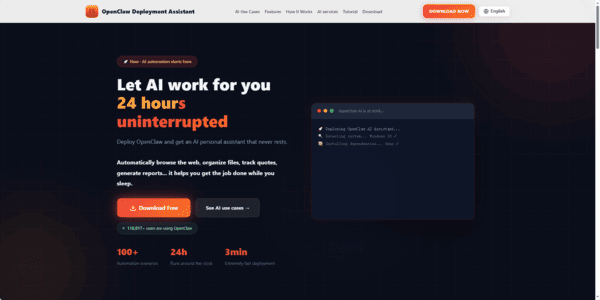
Local deployment with OpenClawTool keeps everything on your own machine, giving you full control over your data. You can run it on Windows or macOS without relying on the cloud, ensuring privacy and security while avoiding the complexity of managing external servers
Memory, Learning, and Agent Behavior
Hermes Agent has a clear edge in adaptive behavior. It can improve over time through experience, refining its approach and learning from outcomes
The OpenClaw offers more controlled and predictable behavior, making it easier to build stable, repeatable workflows that you can trust in daily operations
Channels, Interfaces, and Workflow Fit
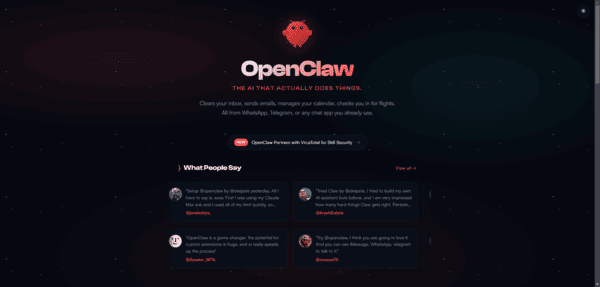
OpenClaw supports a wider range of messaging channels and integrations, making it well-suited for team environments, multi-platform workflows, and operational use cases
Hermes Agent is strong for focused exploration and iterative tasks but has more limited native channel support
Flexibility, Control, and Model Choices
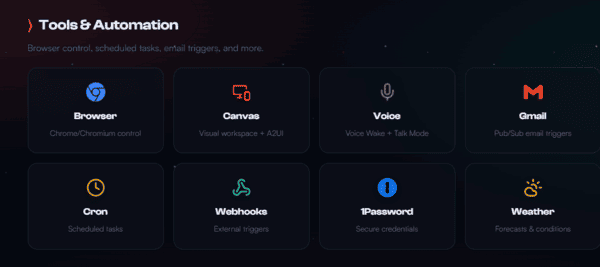
OpenClaw gives users greater control over models, tools, and the overall stack, allowing deep customization to fit specific needs
Hermes Agent leans more toward experimentation with how different models affect adaptive performance, offering less manual control but potentially more natural evolution

Reliability, Security, and Maintenance
Self-hosting OpenClaw brings responsibilities such as updates, monitoring, and troubleshooting, which can add overhead
Hermes Agent also requires attention but emphasizes built-in learning mechanisms that may reduce some manual intervention over time
Security in both depends on proper configuration, though OpenClaw's broader ecosystem can introduce more variables
Pros and Cons Summary
OpenClaw
Strengths: Excellent control, flexibility, broad integrations, and strong fit for practical, structured workflows
Weaknesses: Higher setup and maintenance effort if self-hosted
Hermes Agent
Strengths: Adaptive and self-improving behavior, appealing for agents that evolve with use
Weaknesses: May feel less predictable for stable production workflows and has narrower integration options
Which One Should You Choose
Choose OpenClaw if you value control, customization, broad ecosystem support, and reliable operational workflows — especially with managed hosting to minimize hassle
Choose Hermes Agent if you want an agent that learns and improves autonomously over time with less constant guidance
Choose OpenClawTool if you want OpenClaw's full power while keeping everything local, giving you complete control and privacy without relying on cloud services
Final Thoughts
OpenClaw and Hermes Agent solve similar problems in different ways. OpenClaw is the stronger choice for users who want structured control and wide-ranging integrations, while Hermes Agent stands out for those excited by self-improving, adaptive agents.
There is no universal winner — the right tool depends on whether you prioritize controllability and ecosystem breadth or dynamic learning and autonomy.