



OpenClaw is an open-source autonomous AI agent framework that runs locally on user hardware. At its core lies the OpenClaw Kernel Module — the central execution engine that enables the agent to interact directly with the operating system, execute real actions, and maintain persistent, secure control over tasks. Unlike cloud-based AI tools, OpenClaw keeps all data and processing on the local machine, delivering strong privacy while supporting powerful automation across messaging apps, files, browsers, and system commands.
Core Overview of the OpenClaw Kernel Module
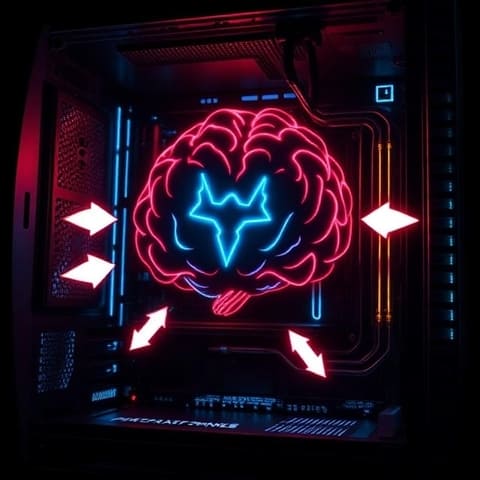
The OpenClaw Kernel Module functions as the "brain" and execution core of the OpenClaw system. It acts as a persistent runtime environment that translates high-level AI instructions into low-level system operations
In essence, it is not a traditional Linux kernel module (loaded into kernel space) but a sophisticated user-space orchestration layer — often described as the central gateway and agent runtime. It runs as a long-lived Node.js process that stays active, ready to receive commands from various channels and execute them reliably
Key characteristics include
Local-first design: Everything runs on the user's hardware, ensuring full data ownership and privacy
Single-instance model: Each deployment is personal and isolated, reducing shared-resource risks
Gateway-centric architecture: A central Gateway component handles input from messaging platforms (WhatsApp, Telegram, Slack, etc.), routes messages to the AI agent runtime, and manages tool execution
Persistent operation: The module maintains session memory, tool state, and context across interactions without frequent restarts
This design transforms OpenClaw from a simple chatbot into a proactive agent capable of handling complex, multi-step workflows
Function
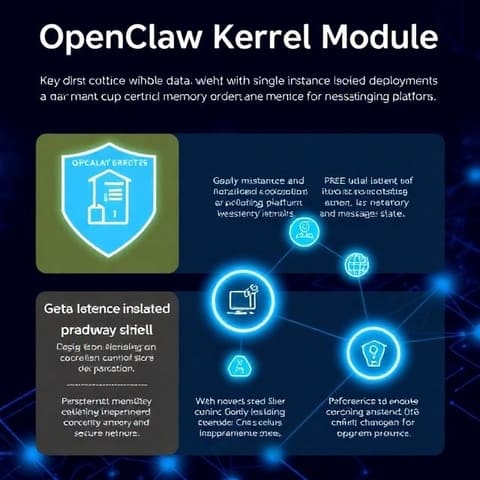
Within the OpenClawTool, the OpenClaw Kernel Module serves as the primary execution engine. It connects user inputs from chat interfaces to a wide range of tools and services, acting as the orchestrator that turns natural language requests into concrete actions.
The module enables users to:
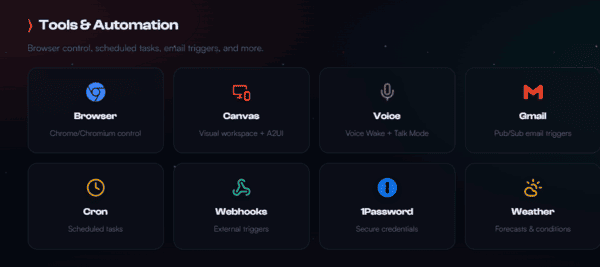
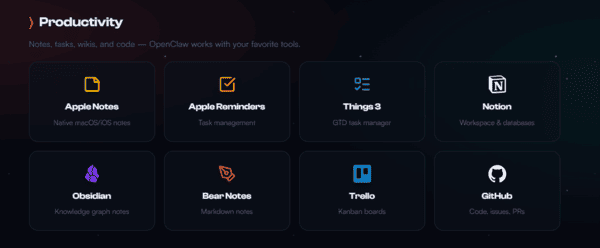
Manage emails, calendars, and cloud storage (e.g., Gmail, Google Calendar, Drive)
Control web browsers for form filling, data extraction, and navigation
Execute shell commands and file system operations
Automate repetitive tasks such as organizing folders, sending notifications, or generating content
Core Features and Functionalities
System-level execution: Running shell commands, file management (read, write, organize, delete), and desktop control
Communication handling: Sending and receiving messages across multiple platforms, managing calendars, and processing emails
Browser automation: Navigating websites, filling forms, extracting data, and performing web-based tasks
Content generation: Supporting creation of user-generated content (UGC), such as ad videos or reports
Getting Started Guide
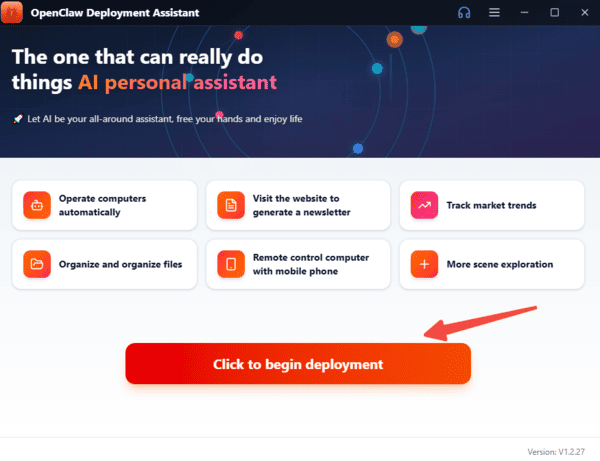
Users can deploy OpenClaw on their preferred hardware
The setup typically involves installing the core package, configuring the Gateway for desired messaging channels, selecting an LLM provider, and optionally adding skills from ClawHub
For easy installation guides, many users start with OpenClawTool to maximize safety while experimenting with OpenClaw
Final Thoughts
The OpenClaw Kernel Module represents a significant step toward practical, local AI agents that can genuinely act on behalf of users. By combining a robust execution runtime, modular extensibility, and multi-channel integration, it enables powerful yet private automation workflows. Whether for personal productivity, content creation, or complex task orchestration, OpenClaw provides the infrastructure layer that turns AI intelligence into real-world results — all while keeping control firmly in the user's hands.