




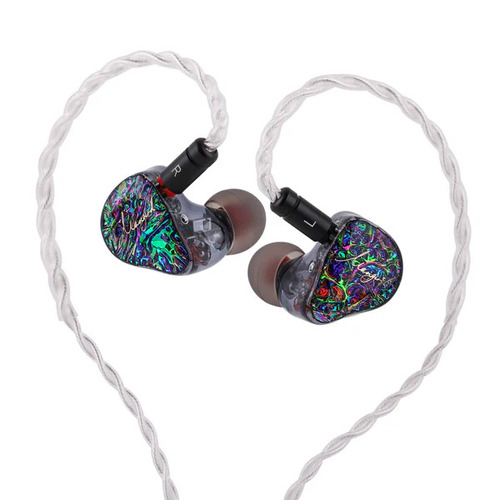
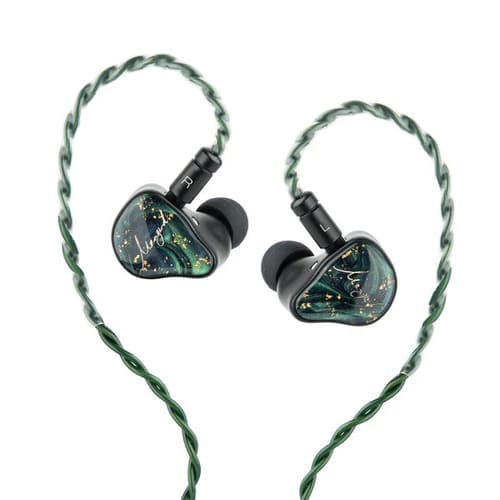
XENNS Mangird earbud(often stylized as Xenns/Mangird) has emerged as a top contender in the hybrid IEM market, delivering exceptional technical performance, natural timbre, and refinement that frequently exceeds expectations in the mid-to-high mid-fi range. The Tea Pro SE is a limited-edition evolution of the acclaimed Tea Pro series, priced around $449–$516 (depending on retailer and promotions), featuring upgrades like enhanced Knowles SWFK 31736 ultra-treble tweeters and a more reference-oriented tuning for cleaner, tighter presentation. The Top Pro sits at ~$499, boasting a 10-driver hybrid setup (2DD + 8BA) with premium execution and extra refinement for a more complete all-rounder experience. In the tight $400–$550 segment, the choice boils down to whether the Top Pro's additional drivers, subtle polish, and technical edge justify the small premium over the already outstanding Tea Pro SE.
Specifications & Hardware Comparison
The Tea Pro SE and Top Pro share a strong hybrid foundation but differ in driver count, tuning focus, materials, and minor specs
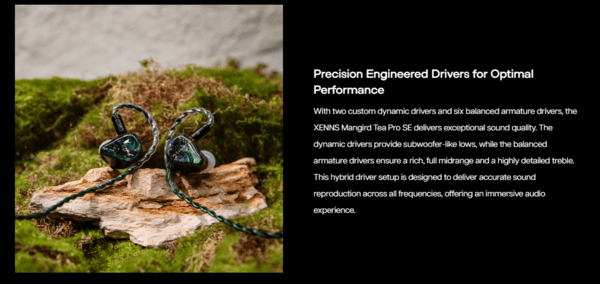
Driver Configuration — Tea Pro SE: 2 custom dynamic drivers (DD) + 6 balanced armatures (BA), including Knowles SWFK 31736 dual super tweeters for enhanced ultra-high extension and air
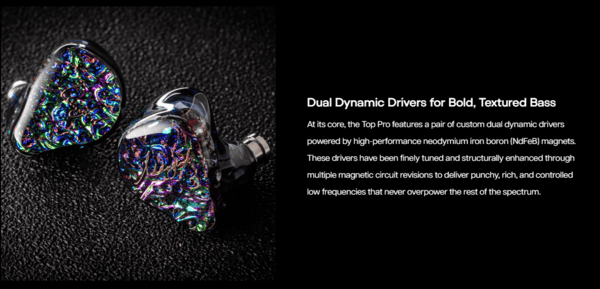
Top Pro: 2 custom DD (with NdFeB magnets for textured bass) + 8 BA, featuring Knowles super tweeter, 2× Sonion E50D, and custom Knowles drivers — the extra BAs boost refinement in mids/treble
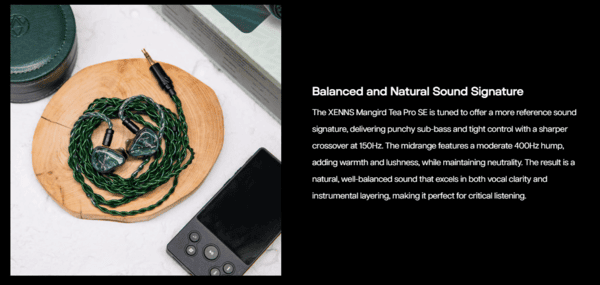
Crossover — Tea Pro SE: Refined 3-way with a sharp ~150Hz transition for cleaner bass-to-mid separation and less bleed
Top Pro: More advanced 4-way passive crossover for superior coherence, layering, and control across bands
Shell & Build — Tea Pro SE: Full metal (aluminum alloy) shells — heavier (~8–9g/side), solid, industrial premium feel with excellent durability
Top Pro: Lightweiht resin shells with artisanal faceplates — lighter (~6–7g/side), more comfortable for long wear, and visually luxurious
Impedance & Sensitivity
Tea Pro SE: 13Ω ±1, 104dB ±1 — extremely easy to drive, scales well with clean sources
Top Pro: 16Ω, 103dB ±1 — similarly source-friendly with negligible real-world difference
Frequency Range & Other — Tea Pro SE: 20Hz–22kHz, focused reference range
Top Pro: 20Hz–33kHz (claimed), emphasizing extra air/extension. Both use 0.78mm 2-pin connectors
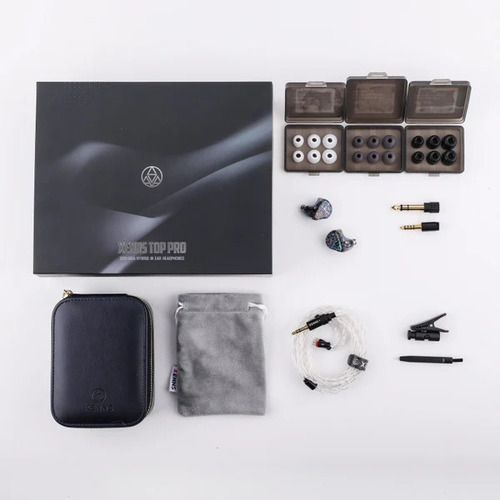
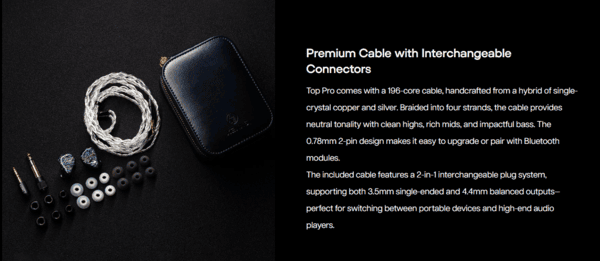
Cable & Accessories — Both include premium modular hybrid cables (copper/silver, swappable 3.5mm/4.4mm plugs), quality cases, multiple tips, and tools. Top Pro's packaging feels slightly more flagship-oriented
Design, Fit, Comfort & Build Quality
Tea Pro SE's metal shells give a cold, industrial, premium vibe — excellent machining, no visible seams, and a weighty, durable feel. Faceplates often feature subtle engravings or matte finishes
Top Pro opts for resin shells with artisanal faceplates (marble-like or custom patterns), which look more "high-end" and artistic. They're noticeably lighter, aiding long-session comfort
Fit: Both are ergonomic with good nozzle angles. Metal Tea Pro SE can feel slightly bulkier in smaller ears, but passive isolation is strong on both (~25–30dB). Top Pro edges out for all-day wear due to lower weight
Build verdict: Tea Pro SE feels more tank-like and premium to touch; Top Pro feels more luxurious and modern
Tuning & Tonality Core Differences
Both share a broadly similar house sound DNA (clean, detailed, controlled), but differences emerge in balance and emphasis
Bass: Tea Pro SE offers punchy, tight sub-bass with excellent control and a sharper ~150Hz crossover — less mid-bass bleed, more reference-like slam. Top Pro's dual-DD bass is slightly more compacted, textured, and defined, with marginally better extension and layering in busy tracks. Tea Pro SE feels "cleaner" here; Top Pro feels more "authoritative"
Midrange: Tea Pro SE leans neutral-reference — vocals are clear, forward enough, with natural timbre and good note weight, but slightly less body/intimacy than warmer sets. Top Pro adds a touch more richness and engagement in lower mids, making vocals feel fuller and more emotive without veering warm. Timbre on both is excellent (natural, non-metallic)
Treble: Tea Pro SE's upgraded Knowles SWFK 31736 tweeters bring noticeably more ultra-high extension, air, and sparkle — detailed and open, with low harshness risk. Top Pro is refined and smooth, with excellent micro-detail and energy, but slightly less "sparkly" in the extreme highs compared to SE's emphasis
Overall signature: Tea Pro SE → more reference/neutral-leaning, analytical, clean. Top Pro → refined U/mildly energetic balance, more musical and complete
Technical Performance Breakdown
Resolution/separation/layering: Top Pro shows better micro-detail retrieval, instrument definition, and blacker background
Soundstage: Top Pro wider and deeper with stronger holography and precise imaging. Tea Pro SE is very good (expansive for price), but slightly more intimate/oval
Dynamics & transients: Top Pro has superior macro-contrast, speed, and slam control. Tea Pro SE is fast and dynamic but feels a step behind in complex passages
Density & texture: Top Pro notes feel denser and more textured overall
Tea Pro SE closes the gap impressively — many call it ~90% of Top Pro on graphs and in blind listening, with the extra drivers providing that last 10% refinement
Real-World Listening Scenarios & Genre Suitability
Pop / Hip-Hop / EDM: Top Pro edges for fun factor — tighter, more impactful bass + engaging mids. Tea Pro SE still excellent if you prefer cleaner presentation
Rock / Metal: Both handle aggression well; Top Pro's refinement reduces fatigue in long sessions
Acoustic / Vocal / Jazz: Top Pro's richer mids and natural timbre win for emotional weight. Tea Pro SE more analytical and transparent.
Classical / Orchestral: Top Pro's superior separation, decay, and stage make it shine in hall ambiance
Gaming (FPS competitive): Both strong; Tea Pro SE praised for clean imaging and footsteps in reviews. Top Pro adds slight edge in spatial cues and layering
Daily/commute/office: Easy to drive (both scale with good sources). Tea Pro SE's reference tuning pairs well with neutral dongles; Top Pro forgives warmer sources better
Tips to get better performance
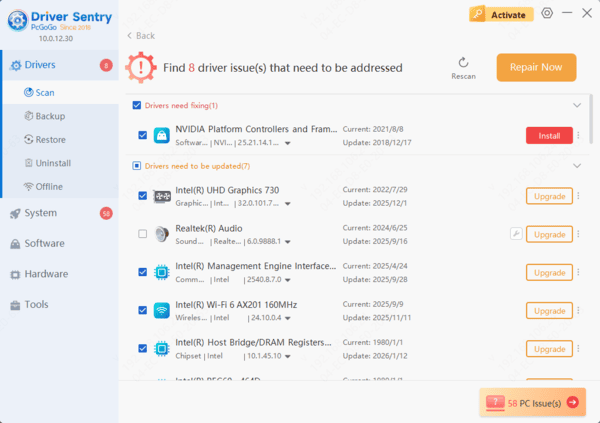
To get the best performance from your XENNS Mangird Tea Pro SE or Top Pro, it's crucial to keep your drivers up to date
Driver Sentry makes this easy by automatically detecting and updating outdated audio drivers
Simply download and install Driver Sentry, run a scan, and update your audio drivers with a click
After a quick reboot, you'll enjoy improved sound quality, better connectivity, and overall enhanced performance for all your audio needs
Buying Recommendation
Choose Tea Pro SE: Budget caps at ~$450, you prefer cleaner/reference tuning, love air/sparkle in treble, or want metal-shell premium feel. It's an incredible value — arguably the best "reference" hybrid under $500 right now.
Choose Top Pro: You want the current XENNS flagship experience, maximum technical performance (resolution, stage, refinement), and don't mind ~$50 extra for that last polish. It's the more "complete" and future-proof pick.