




In 2026, AI coding agents have become essential tools for developers, transforming how software is built, tested, and maintained. Among the most prominent options, Codex and Claude Code stand out—but they embody fundamentally different approaches. Codex excels at autonomous, parallel task execution, allowing developers to delegate work efficiently, while Claude Code thrives in interactive, real-time collaboration, providing immediate feedback and hands-on guidance. Choosing the right agent depends on your workflow style, project complexity, and whether you prefer hands-off automation or active partnership during development.
What Is Codex?
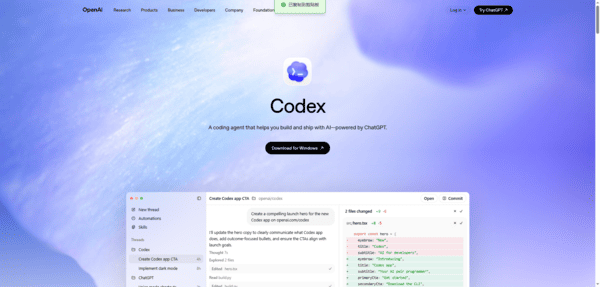
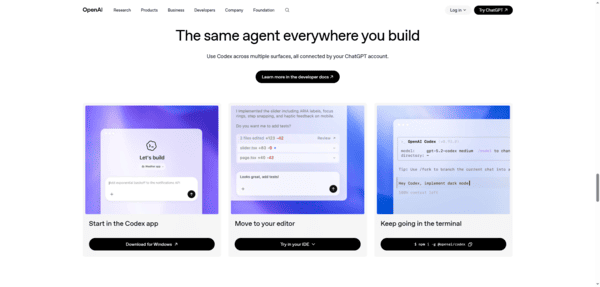
Codex is OpenAI's autonomous coding agent, designed for efficiency in executing well-scoped tasks in the background. Its key strengths include:
Delegation at scale: Codex can handle multiple tasks in parallel within cloud sandboxes, freeing developers to focus on higher-level work
Structured workflows: Ideal for batch operations, repeatable implementations, and standard coding processes such as ticket handling or pull request generation
Autonomy: Once provided clear specifications, Codex executes tasks independently, making it excellent for "fire-and-forget" automation
Codex is particularly effective in scenarios like large-scale refactoring, generating boilerplate code, or running parallel test scripts—tasks that benefit from minimal supervision
What Is Claude Code?
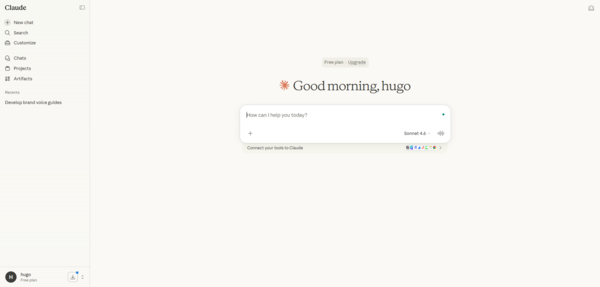
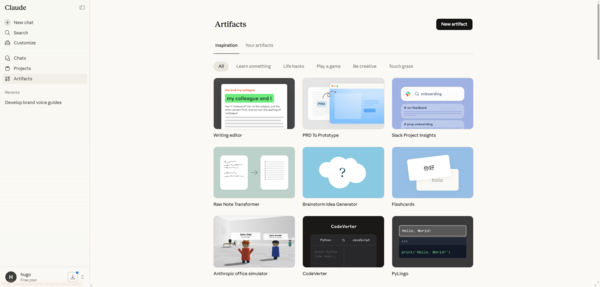
Claude Code, developed by Anthropic, is designed for interactive coding and real-time collaboration. Its advantages include:
Collaborative workflow: Integrates closely with local environments for back-and-forth coding sessions, giving developers hands-on control
Live debugging and iteration: Perfect for tasks that evolve, require contextual awareness, or benefit from immediate human feedback
Adaptability: Responds dynamically to changing project requirements, making it ideal for exploratory coding, feature design, or problem-solving in uncertain conditions
Claude Code feels more like a development partner, guiding and refining code iteratively while maintaining awareness of the surrounding project context
Head-to-Head Comparison
Work Style and Interaction Model
Codex: Best for autonomous, asynchronous workflows. Developers define tasks, step away, and return to completed results. Its parallel execution capabilities make it highly efficient for batch jobs
Claude Code: Best for interactive, hands-on workflows. Supports tight feedback loops, live code adjustments, and real-time problem-solving directly in your development environment
Task Suitability
Codex: Excels on clearly defined tasks with specific outputs. Perfect for batch refactoring, repetitive implementations, and parallel operations
Claude Code: Excels on tasks that are ambiguous, evolving, or require ongoing iteration and nuanced understanding
Strengths and Trade-offs
Codex: Offers autonomy and efficiency for structured work but may feel less natural for tasks needing continuous supervision or creative input
Claude Code: Provides real-time control and contextual awareness but can be more sensitive to session duration and task complexity
Which One Should You Choose?
Choose Codex if you want:
Autonomous and parallel task execution
Delegation-heavy workflows
Well-defined, repeatable coding jobs
Fire-and-forget automation
Choose Claude Code if you want:
Interactive iteration and live debugging
Collaborative development sessions
Handling of ambiguous or evolving tasks
Tighter control in your local environment
Many developers adopt a hybrid strategy: Codex handles structured, implementation-heavy tasks, while Claude Code manages debugging, feature exploration, and interactive design.
When OpenClaw Makes More Sense
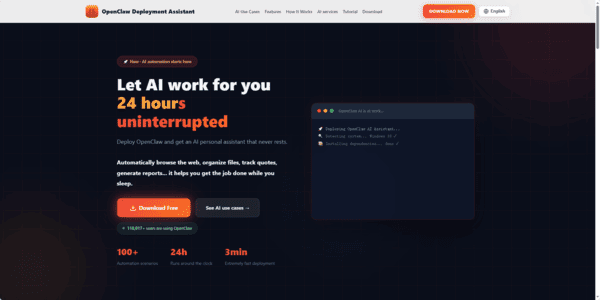
OpenClaw is ideal for developers, founders, operators, and teams who want the power of AI-assisted coding without relying on cloud services or dealing with third-party data handling
Unlike managed cloud solutions, OpenClawTool is designed for true local deployment, giving you full control over your data, privacy, and workflow
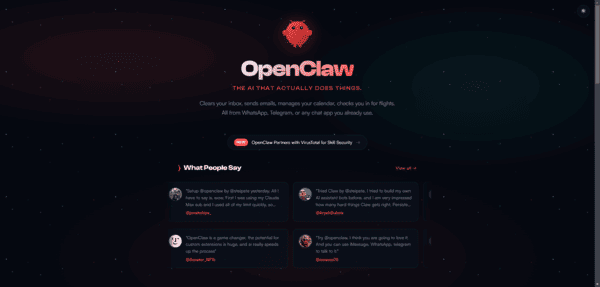
For teams and individuals who value maximum privacy, complete ownership of conversations, and local control over API keys, OpenClawTool eliminates the need to spend time on cloud setup, hosting, or workflow maintenance
It is the natural choice when you want the practical benefits of an AI coding agent without turning the tool choice into a full-time infrastructure project
Final Thoughts
Codex represents delegation: give clear instructions and let the agent work independently. Claude Code represents collaboration: work side-by-side with the agent in real time.
By aligning your choice with your actual coding habits—whether you prioritize autonomy or interactive collaboration—you can maximize productivity and achieve smoother project outcomes in 2026. Many teams benefit from strategically combining both, leveraging Codex for efficiency and Claude Code for guidance and refinement.